Making sense of your weight trend
Learn how to look past daily scale fluctuations and track real progress through weight trends, body measurements and daily habits.
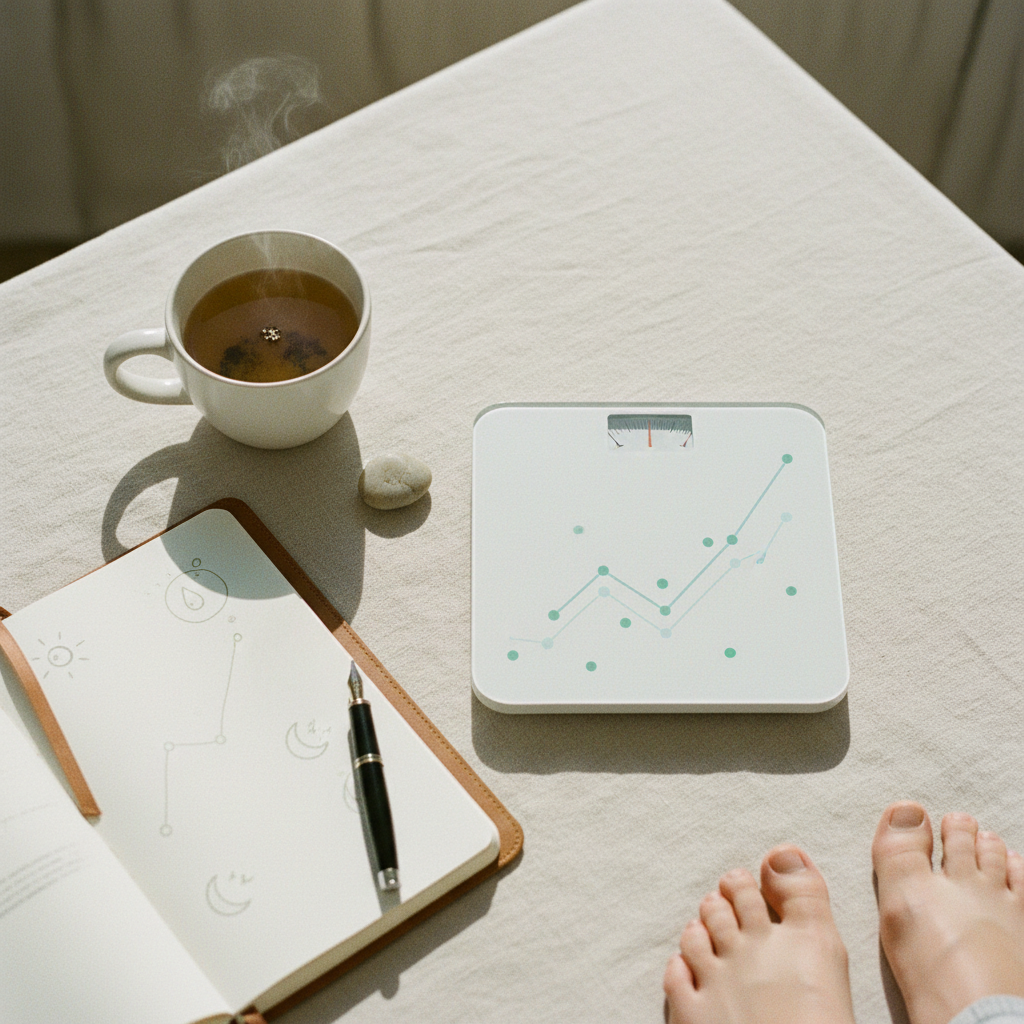
You step on the scales first thing in the morning and the number is up. Your heart sinks. You instantly start calculating exactly what you ate yesterday to cause this bump. But bodies aren't machines. They hold onto water. They process heavy meals slowly. A rough night of sleep will also mess with the scales.
The trouble with daily weighing
That number on the plastic box in your bathroom tells you your total mass at that exact second. It includes your bones and your organs. It also counts the water you just drank and the food still making its way through your digestive tract.
It doesn't tell you if you are building a healthier routine. Seeing a random spike on a Wednesday morning can make you want to walk away from everything. It is incredibly annoying to put effort into a brisk evening walk and a solid protein breakfast only to see a higher number the next day. You feel like nothing is working.
This happens to everyone.
Zooming out to see the real story
Look at your weight over four weeks instead of four days. You might see the number bounce up and down wildly from Monday to Friday. But if you connect those dots over a month, the overall line usually points gently downwards.
There are mobile apps that will smooth out this data for you. They take your daily or weekly entries and draw a moving trend line. That line is your actual reality. The daily spikes are just background noise.
If looking at the daily data causes you anxiety, stop doing it. Step on the scales once a week or even once a month. The medication is still working in the background whether you look at a screen or not.
Measurements tell a different tale
Sometimes the scales refuse to budge for weeks. This is a very common experience on medication like Wegovy or Mounjaro. Your body is busy reshaping itself behind the scenes.
This is when a basic tape measure becomes your best friend. Grab one and check a few spots once a month.
You might find your favourite jeans are buttoning more easily. Maybe a tight jumper suddenly sits smoothly over your shoulders. Those physical changes matter just as much as gravity.
- Around your waist just above your belly button
- The widest part of your hips
- Around the middle of one thigh
Tracking the habits you can control
You can't force the scales to move on command. You can control whether you eat a decent lunch and get up for a ten minute walk after dinner.
Focus on these small actions. Ticking off a glass of water or a solid night of sleep builds real momentum. Over time, these basic choices pile up into genuine lifestyle changes that stick around.
When the numbers stall, lean on your habits. They're the scaffolding keeping everything else upright.
What to do next
Pick one way to measure your progress this week that has nothing to do with the bathroom scales.
It could be noticing how much easier it is to climb the stairs. You might simply focus on drinking a glass of water before your morning tea. Just choose one simple thing and stick with it.
If you ever feel concerned about your progress or how your medication is working, always speak directly with your prescribing clinician.