How to Lose Weight Fast on GLP-1 (and Why You Shouldn't)
Everyone wants the scales to move quickly on GLP-1. Here is why a steadier pace protects your muscle, your skin and your confidence — and how to stop comparing.
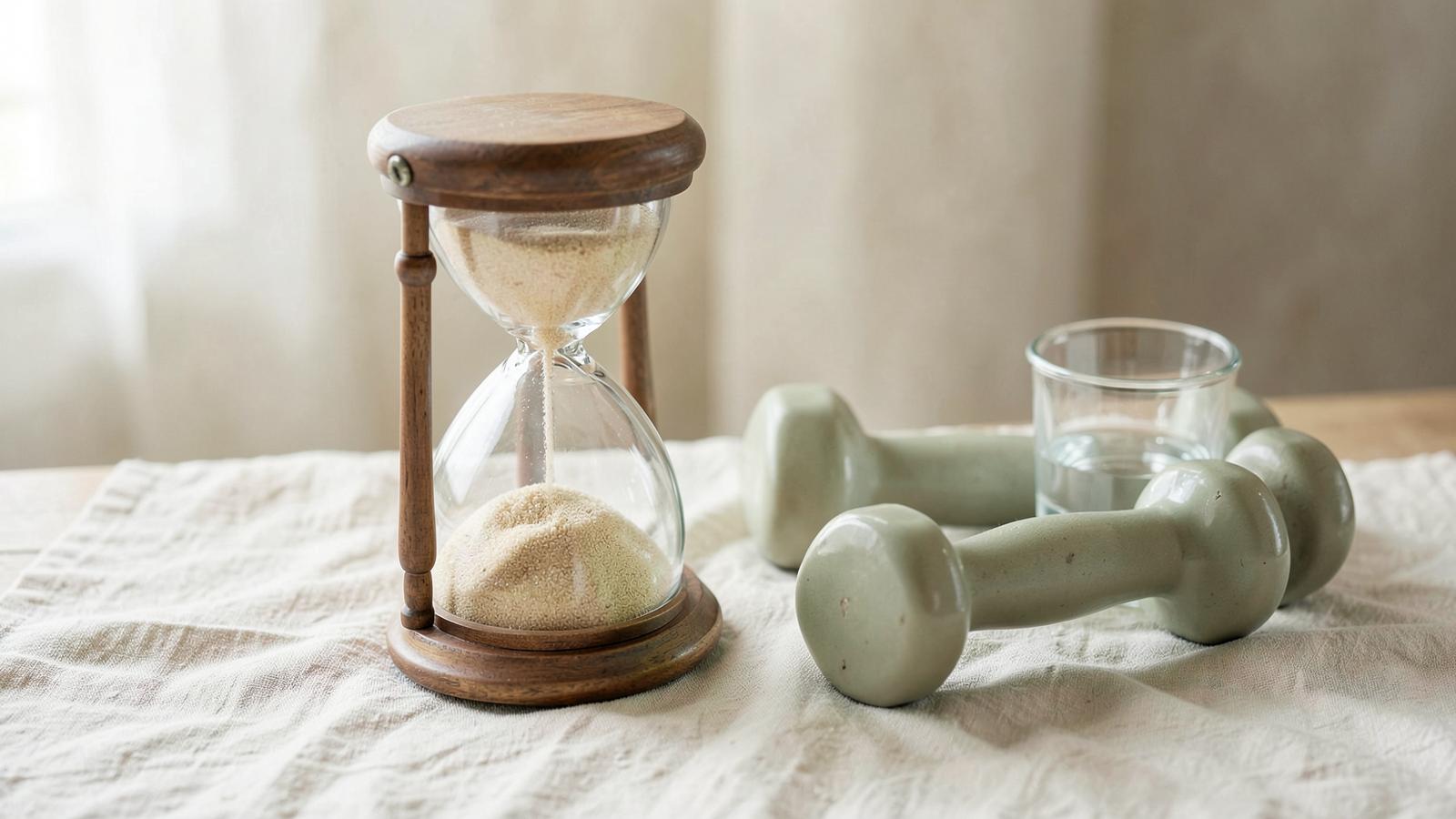
Let's be honest about why you clicked. You want this to go quickly. The medication is expensive, you have waited years to feel like yourself again, and every week that the scales barely move feels like money and hope leaking away. That is a completely human thing to want. So here is the fast answer, and then the honest one.
The fast answer nobody sells you
There is no trick that safely speeds this up. Your dose, your timing and any change to your medication belong to your prescribing clinician, full stop.
What you actually control is what happens around the medication. Eating enough protein. Moving your body. Sleeping. Staying consistent on the weeks that feel boring. That is the unglamorous list, and it is the one that decides how you look and feel at the end of this.
Someone will always be losing faster than you
You know the conversation. "My friend lost 20 kilos in three months." And you have lost five in two, and suddenly your own progress feels like a failure. It isn't.
Every body arrived at this point differently. Different genetics. Different family history. Different hormones. Different underlying health conditions. Some women have carried this weight since childhood. Some gained it during pregnancy, or through perimenopause, or through a decade of stress and shift work and caring for everyone else first.
None of that is comparable to your friend's cousin who dropped four dress sizes by summer. You are not running the same race, on the same track, in the same body. So when someone tells you it should be going faster, you are allowed to nod politely and carry on doing you.
What happens when it comes off too fast
Skin needs time. It can retract and adapt to a smaller frame, but it does that slowly, and it does it far better when the change is gradual. Lose a lot very quickly and you are more likely to be left with looser skin than you would have had otherwise.
The same goes for the face. What people call "Ozempic face" is simply what happens when fat volume disappears from the cheeks and temples faster than the skin can keep up. It is not a mystery and it is not your fault — it is speed.
You cannot avoid all of it. Losing 20, 30 or 50 kilos changes your body, and nobody should promise you a perfectly taut result. But giving your body months rather than weeks to adjust gives your skin its best chance to regenerate along the way.
Protect your muscle — it matters more than the number
When weight comes off, some of it can come from muscle as well as fat. That is the part worth defending, because muscle is what keeps you strong, steady on your feet and able to lift your own shopping at seventy.
Rebuilding lost muscle takes far longer than losing it did. So the goal through this whole journey is simple: keep what you have, and add a little where you can.
Two things protect it. Enough protein spread through the day, and resistance training — the kind where your muscles have to work against something.
You do not have to become a bodybuilder
Nobody is asking you to join a gym on Monday. If you have not exercised in years, the bar is much lower than you think.
Pick up two water bottles, one in each hand, and move them. Press them overhead. Curl them. Do it while the kettle boils. That is strength training. It counts. Next month it can be a resistance band, then a pair of light dumbbells, then a little heavier again.
A gentle place to start:
- Two short strength sessions a week, ten minutes each, using bottles, bands or bodyweight
- A daily walk you would actually do in the rain, not the ambitious one you keep skipping
- Protein at every meal, so your body has something to build with
- One rest day you take on purpose rather than by accident
Cardio is welcome, strength comes first
Walking, swimming, cycling — all lovely, all good for your heart, your head and your sleep. Keep them.
But if you only have twenty minutes and you have to choose, choose the thing that asks your muscles to work. Cardio supports the journey. Strength protects what you are carrying into the rest of your life.
Slower is not failing
A steadier pace is easier on your skin, kinder to your muscle, and far easier to sustain when the medication is no longer part of the picture. It also gives your habits time to catch up with your body, which is what actually holds the result in place.
So stop letting other people set the tempo. This is not a sprint and there is no medal for arriving first. Take your time, enjoy the parts of it you can, and let the weight come off at the speed your body can actually live with.
If anything about your progress, your energy or your side effects worries you, that is a conversation for your prescribing clinician — not for the internet, and not for your cousin's friend who lost it all by June.